
Not All Therapy Points in the Same Direction
Speech therapy for stuttering can be motivated by different values, goals, and outcomes. Some approaches lead toward concealment, and others toward authenticity.

Fluency-Focused Approaches
In traditional fluency-focused approaches, the focus of therapy is teaching the person who stutters to use “speech tools” — techniques like speaking slowly and easing into sounds. These tools are concealment strategies in disguise, and can often add to the speaker’s internal struggle during communication.
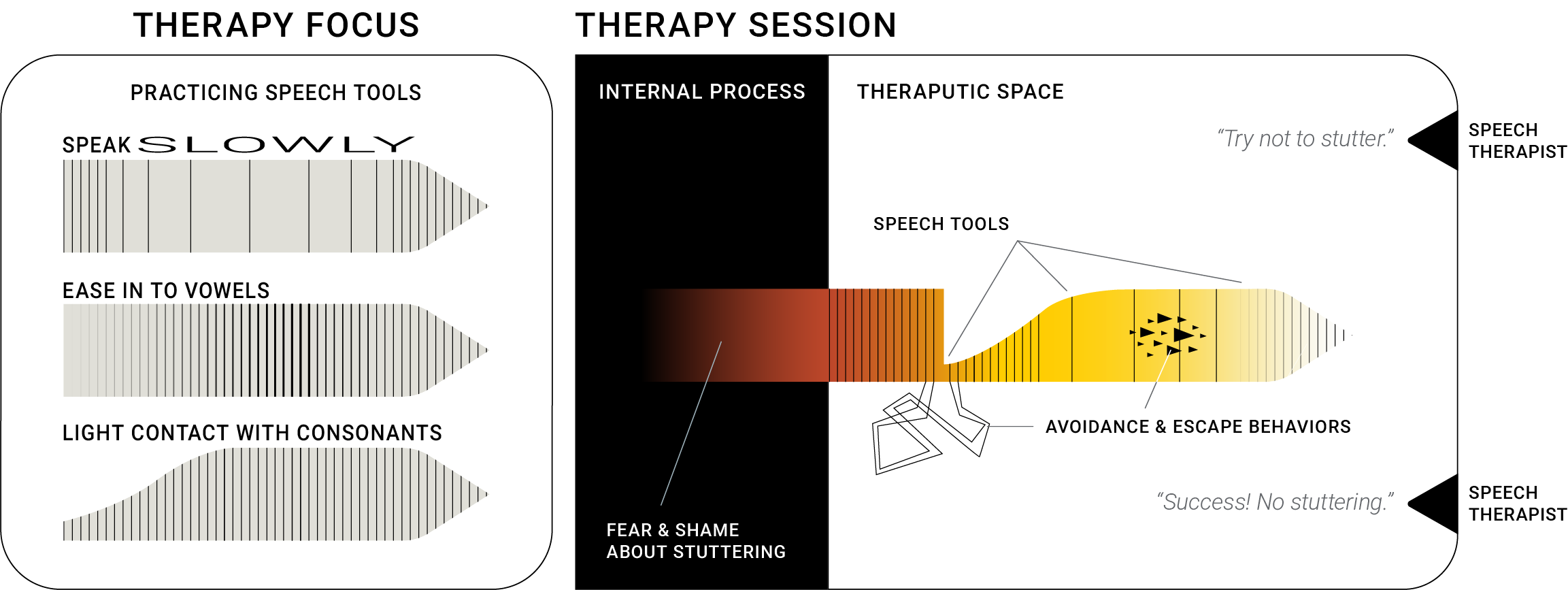
The goal of these speech tools is to make speech sound smooth or stutter-free to listeners, even though it doesn’t feel natural to the speaker using them. While the tools may appear to work within the therapy room, they can be incredibly difficult to maintain over the long term; the effort required can make speakers sound and feel robotic, and it pulls their attention away from the person they’re talking to. Fluency is praised, but because the speaker’s internal experience and deeply ingrained avoidance and escape behaviors are never addressed, their speech becomes full of tricks aimed at avoiding stuttering at all costs. Beneath the surface, this takes a deeper toll: by treating stuttering as something to be hidden, these approaches tend to reinforce fear and shame rather than relieve them.
Avoidance Reduction Therapy for Stuttering
In our lab, we study a contemporary stutter-affirming approach known as Avoidance Reduction Therapy for Stuttering (ARTS®). In ARTS, people who stutter build confidence, self-acceptance, and genuine connection with others by showing up authentically as stutterers.
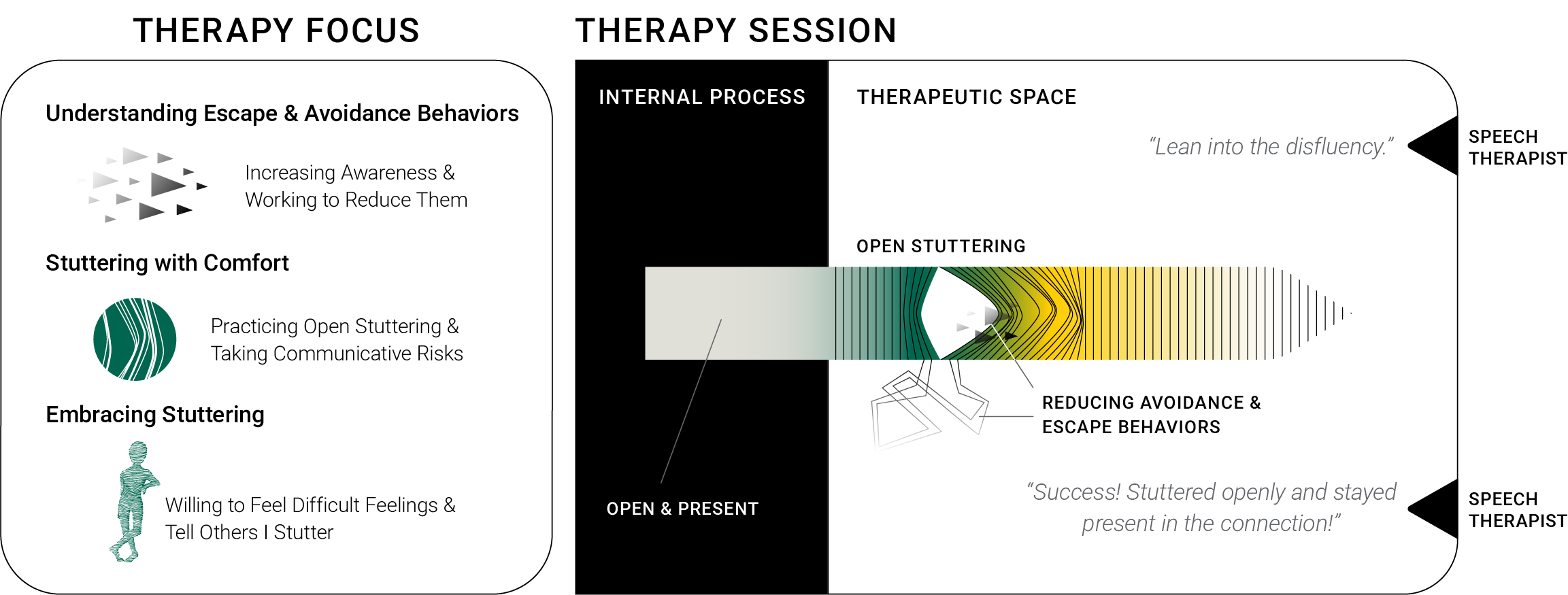
Through ARTS, people come to understand their escape and avoidance behaviors and work toward unlearning those conditioned reactions. In doing so, they systematically build up their ability to stutter more comfortably and take communicative risks by stuttering more openly, first in the safety of the therapy space and building up to more feared situations. In ARTS, stutterers embrace stuttering by leaning into moments of stuttering, difficult feelings around stuttering, and their identity as someone who stutters.
A hallmark of progress in ARTS may seem counterintuitive at first: as speakers become more willing to stutter openly, their stuttering may become more visible. In ARTS, this is not seen as a setback, but rather as a sign of success that hiding and struggle are fading, while authenticity is shining through. This stands in stark contrast to fluency-focused approaches where reduced stuttering frequency is the measure of success.
And because the fluent world can be an impatient place for people who stutter, speakers on a stutter-affirming journey like ARTS often develop self-advocacy skills by asking for what they need, helping the people in their life understand how to show up for them, and finding community with others who get it.
The landscape of stuttering therapy is shifting.
A new generation of clinicians and researchers are moving away from the goal of performing fluency and toward something more meaningful: supporting people who stutter in living fully, communicating freely, and showing up authentically in the world. Our lab is proud to be part of that movement.

Keep Exploring Stuttering in Context: